Saturday, 15 May 2010

"Al Nakba"--The Palestinian Catastrophe of 1948


The Palestinian Exile, also known as Al Nakba (Arabic for "The Catastrophe"), refers to the ethnic cleansing of native Palestinian peoples ... all » during the 1948 Arab-Israeli war.

From December 1947 until November 1948, Zionist forces (namely the Irgun, Lehi, Haganah terrorist gangs) expelled approximately 750, 000 indigenous Palestinians--almost 2/3 of the population--from their homes.

Hundreds of Palestinians were also murdered for refusing to leave their homes. The most notable massacre is the Deir Yassin Massacre, in which an estimated 120 Palestinian civilians were brutally murdered by an Irgun-Lehi force. Other massacres include the ones at Sahila (70-80 killed), Lod (250 killed), and Abu Shusha (70 killed). About 40 other massacres were carried out by Zionist forces in just the summer of 1948.

Not only did Zionist forces conduct massacres of Palestinian civilians, rape occured as well. According to Israeli historian Benny Morris, "In Acre four soldiers raped a girl and murdered her and her father. In Jaffa, soldiers of the Kiryati Brigade raped one girl and tried to rape several more. At Hunin, which is in the Galilee, two girls were raped and then murdered. There were one or two cases of rape at Tantura, south of Haifa. There was one case of rape at Qula, in the center of the country. At the village of Abu Shusha, near Kibbutz Gezer [in the Ramle area] there were four female prisoners, one of whom was raped a number of times. And there were other cases. Usually more than one soldier was involved. Usually there were one or two Palestinian girls. In a large proportion of the cases the event ended with murder. Because neither the victims nor the rapists liked to report these events, we have to assume that the dozen cases of rape that were reported, which I found, are not the whole story. They are just the tip of the iceberg."

During Al Nakba, Palestinians were murdered, raped, and ethnically cleansed from their villages. According to Israeli historian, Ilan Pappe, "In a matter of seven months, 531 villages were destroyed and 11 urban neighborhoods emptied."

Palestinians were forced into were forced out of Palestine and into neighboring countries (i.e. Lebanon, Syria, and Jordan), where they lived in refugee camps. Many were also sent to camps in West Bank and Gaza Strip.

Most Palestinian towns were demolished and taken by the newly established Israeli government to make room for new Jewish immigrants. Old Palestinian infrastructures, as well as many ruins dating back from the Canaanites, Romans, Greeks, Crusaders, Arabs, and Ottoman Turks were completely destroyed. This signified the end of historical Palestine and the birth of modern-day Israel.

Al Nakba marked the beginning of the Palestinian refugee crisis. Al Nakba destroyed a thriving and diverse Palestinian society and scattered them into diaspora. According to the UNRWA, the number of registered Palestinian refugees today is approximately 4.5 million. These refugees are dispersed throughout the world, many of which are still living in poverty-stricken refugee camps. Today, the situation keeps worsening and thousands die from malnutrition, contaminated water, or scarce medical supply.

Israel has since refused to allow Palestinian refugees to return to their homes, and has refused to pay them compensation as required by UN Resolution 194, which was passed on December 11, 1948.

Historically, the Israeli government, Israeli schools, and Israeli historians have denied that Al Nakba has occured. However, The New Historians, a loosely-defined group of Israeli historians, have recently published information recognizing the Al Nakba tragedy and controversial views of matters concerning Israel, particularly events concerning its birth in 1948. Much of their material comes from recently declassified Israeli government papers. Leading scholars in this school include Benny Morris, Ilan Pappe, Avi Shlaim, and Tom Segev. Many of their conclusions have been attacked by other scholars and Israeli historians, who continue deny Al Nakba even occured

Wednesday, 24 February 2010

I Still Want Peace

Having walked across the dead bodies of my relatives and people and having experienced their deaths; I still want peace, I still dream of peace and security for the families of Gaza and all of Palestine
I come from an area of the world that has been violated; violated of our human rights for decades, which continues up to this very day, to this very moment as I speak these words. I have come from the heart of Israeli-Palestinian conflict to study, not necessarily to understand my conflict better, as I have lived the conflict my entire life, but to find a means to ending the conflict, and to attaining peace and justice for my people.

It was not easy for me to come here, as I struggled for many months with the idea, and the possibility, of not being able to make it through the Gaza Siege, the complete and total enclosure of Gaza from the rest of the world. Only through the efforts of many people, including those of you in my class that supported me in my time of need, was I able to break through the siege and ultimately make it here to Castellon where I share with you these words today.

I am sincerely grateful to my new university, the university of Jaume Primer, my classmates, professors and the administration for all of your support in making this master program a possibility for Ayman Quader. I believe that my experiences and hardships in Gaza will bring a fresh dimension and perspective to the study of conflict, development and peace studies.

It is my hope that my presence with you here today, and in the coming months, in this congress, might assure me that justice and peace will prevail one day in the near future. When I was initially stuck in the Gaza Strip and unable to travel hear and when my eventual presence in Castellon was still in doubt, I was really frustrated because I was just asking for a very basic right human right, which is the right of education. Such a right is guaranteed under international laws and conventions. After a long battle, which fortunately resulted in me being here, I can’t find the words to truly express to all of you how much it really means for me to be here; not only for me, but for my family and my friends that are still stuck in Gaza without any proper means to sustain themselves and their basic needs.

Coming from the conflict, and growing up in the conflict, it is difficult for me to step outside of the injustice that I have suffered and to glean differing perspectives on the situation in Gaza and in Palestine, and it is my hope that this program will give me the perspective to be able to do this, while applying an academic framework that incorporates the prospects of peace and development. This is truly what I feel Gaza needs at this point in time. We are a damaged people, an abused people; because of the injustice that is taking place in Gaza, it can be extremely difficult for many of us to break through the anger and pain of the occupation, and to seek a peaceful solution. Many of my brothers and sisters in Gaza have experienced so much injustice, that it is almost impossible to seek a solution to the conflict through peaceful means. It is especially for these people that I am here today.

While I hope to learn basic frameworks for applying peace and conflict resolution to my homeland of Palestine, without the end to the human rights violations that have occurred over the course of nearly 62 years, without the end to the oppression of my people and the hope for sovereignty and freedom for the future, such a conflict can never be solved. In 1948, 750,000 Palestinians were ethnically cleansed from their ancient homelands, and to this day, no reparations have been made for this initial injustice, an injustice which continues to this day with the continued annexation, for colonial settlement, of East Jerusalem and the West Bank – contrary to international law and many UN resolutions – and the brutal siege on the Gaza Strip, which escalated to a full scale attack on civilian infrastructure in Gaza in the winter of 2008-2009; an escalation in which 1,400 Palestinians lost their lives. The destruction in Gaza last winter was truly horrifying.

This is the basis of the Palestinian struggle, of my personal struggle; the struggle for justice in a land of injustice and personal struggle. It is my hope and my dream that I will be able to learn something over the course of the next two years that will help my people to overcome this struggle for justice and for peace.

=============================
Ayman T. Qwaider
International Master Postgraduate Official Programme in Peace, Conflict and
Development Studies - UNESCO Chair in Philosophy for Peace - Gaza
University of Jaume I
Av. Vicent Sos Baynat
12006. Castellon de la Plana, SPAIN.
+34 648 44 11 98
E-mail: ayman.qauder@gmail.com
Skype: peaceforgaza
Facebook: ayman.quader
Twitter: peaceforgaza
Web: www.peaceforgaza.blogspot.com
www.paltelegraph.com
http:picasaweb.google.com/ayman.qauder
=============================

Saturday, 20 February 2010

A One-Man Campaign


It doesn't often happen that we get to report success stories, but this week Ayman Quader "made it". Ayman, a 23-year-old student from the Gaza Strip, overcame numerous obstacles to reach his goal. After working tirelessly and contacting anyone who would listen to his story, he received his longed-for transit permit from Israel in order to exit the Gaza Strip and travel to University of Jaume in Spain, to pursue a graduate degree in Peace, Conflict & Development Studies (how appropriate!).

On November 3, 2009, Ayman received his acceptance letter from the university, and from that moment he began his journey on an obstacle course to receive the necessary transit permit from Israel to leave Gaza. First up, the Palestinian Civil Affairs Committee refused to forward his application to the Israeli District Coordination Office (DCO), noting that the DCO does not accept applications from students, but Ayman did not give up. His next step was to contact Gisha who appealed to the Spanish Embassy. This was necessary because Israel makes a transit permit conditional on an official request from the student’s destination country and requires its diplomats to escort the student from the Erez border crossing between Israel and Gaza to the Allenby Bridge border crossing between Israel and Jordan – an awkward arrangement that overburdens diplomats and restricts students.


Ayman, who knew the fate of most others who had submitted similar applications, simultaneously launched a media “campaign", which started on his blog, continued on the Facebook group he created, and reached a peak with his starring role in countless articles in the local and Spanish press. His efforts ultimately bore fruit, and Ayman, who has meanwhile become a media star in Spain, received his transit permit from Israel to travel to Spain. Ayman's story has a happy ending, but there are still close to 600 young people waiting in Gaza for exit permits to travel abroad to study. Ayman, finish your degree in conflict resolution and come back quickly! Your talents are sorely needed.

Sunday, 14 February 2010

FROM DARKNESS TO THE LIGHT, Gaza To Barcelona

FROM DARKNESS TO THE LIGHT


From Gaza to Barcelona

There are incredible feelings passing through my body these days in Spain. In Gaza, there were basically three feelings I had, one was happiness, another was hope, and the third was worry. In Gaza where my studies started, worry was the biggest feeling. Worry of where it will all lead to. I was fortunate that it eventually led to Spain where I am being supported by really good people who are concerned about my cause. Hope is now the predominant feeling, hope that the light would come.

I am personally gratified for my new situation in Spain. I am gratified that so many people helped me get out of Gaza and engaged in the media campaign that took place. However, there are 500 other Aymans in the Gaza Strip in the same situation that I was in. They are being deprived of their basic right to an education, a right that is protected by UN agreements and resolutions, but no longer respected or adhered to. It is a great tragedy to think that the other 500 Aymans need a special media campaign to get them out as well.

Aside from education, the Gaza Strip has been experiencing a siege where over 1.5 million people are deprived of their basic rights. Last night I took a break from celebrating with my new friends to call my father. It was ten in the evening. He informed me that they were now in total darkness as the power supply had been cut off. This was a result of the siege which prevented the necessary industrial fuel from entering the area. Just another example of the collective punishment that is being inflicted on an entire population.

This should send an explicit message to the International Community to help put an end to the suffering of 1.5 million people and open the borders of Gaza. The siege must be ended! Palestinians must be given the chance to live their lives with pride and dignity. The inhumanity that is ting place in the Holy Land must come to a halt. The world must come to the realisation that we are all human beings with common interests.
Ayman Quader
Castellon, Spain

Monday, 1 February 2010

A Student From Gaza


A Student From Gaza

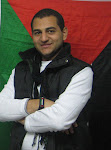
My name is Ayman Talal Quader, I am 23 years old, and I live in the Nuseirat refugee camp [1], in the middle of the Gaza Strip.

CAS: What is it like to be a student in Gaza?

Ayman Talal Quader: I remember when I was still at secondary school, it was before the withdrawal of Israeli settlers from Gaza in 2005, and the Israeli army would block the road which ran from where I lived to where my school was. So, from an early age I learnt the education of occupation.
I finished my degree at the Islamic University of Gaza [2]in January 2008. The situation for students in Gaza is completely different from those studying outside of Palestine. Most students here never get the chance to prove their true potential. I am 100% certain that they have the desire and energy to do so, but they are simply not given the space to demonstrate their abilities. Of course, the students are seriously affected by the ongoing siege of the Gaza Strip; we cannot get the materials we need, the books, stationary and even paper!
In the most recent war, several of the university buildings were either partially, or in some cases completely destroyed. With the borders are still closed, no raw materials are being allowed into Gaza, so those buildings that were destroyed a year ago are still lying in piles of rubble.

CAS: Are you hoping to continue your studies?

Ayman Talal Quader: I hope to study towards a Masters at Universitat Jaume I (UJI) [3] in Spain, in a city called Castellón, not far from Valencia. I was a granted a scholarship in November 2009, to study Peace, Conflict and Development Studies.
I have all the legal papers I need: passport, visa, an acceptance letter from the University, supporting letters from NGOs in Spain, and even from the Spanish Embassy in Cairo. But as you know, the borders are closed, so no-one can leave easily. My problem right now is that my studies start in six days from now, on February 8th, and I have no way of leaving Gaza…
I have been co-ordinating with embassies and human rights organisations, but I still haven't heard anything. My flight leaves from Cairo on February 1st, but if I'm not allowed out then I will lose my ticket. I am so frustrated by this situation.
I saw in the news yesterday that Spain are acting as a mediator, to assist myself and 13 other students to leave the Gaza Strip, who are about to lose their scholarships. So I hope that everything will be OK, and I feel so lucky to have been able not only to get my voice out there, but also to help raise awareness about those other 13 students.

CAS: If you are not allowed to travel abroad, how do you see your future?

Ayman Talal Quader: This is a very frustrating question for me. I hope that I will get out without any problems. This is a golden opportunity for me, and I don't want to lose it under any circumstances, but I do fear for my future.

CAS: How can students in other countries support your cause?

Ayman Talal Quader: As students from across the world, we all share one thing in common - the right to education. This is a right supported by international law, supported by the UN, by the EU, and by governments and agencies from all over the world. So all I need is my right, to pursue my studies like any other student.
I have already received a lot of support from international students, people that are just like me, especially from those in Spain. They are running a petition, [4] which has received 200 signatures so far, they launched a Facebook group called "Open Rafah For Ayman" [4]which many people have joined, and it makes me so happy to see their comments in the group. I have also been interviewed by newspapers, magazines, and two days ago by a local Spanish radio station in Castellón, where I spoke about my story and the ongoing suffering of the Gaza people.
The support is great, but in reality it doesn't mean anything, all I need now is a quick solution for my situation.

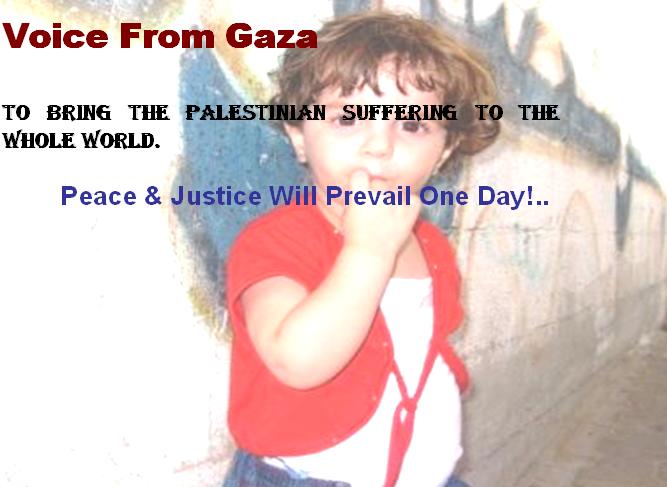
CAS: What gave you the idea to start your "Voice From Gaza" [5] blog?

Ayman Talal Quader: During the war on Gaza, I was stuck in my home for 23 days straight, with nothing to do. I didn't have much experience in writing or blogging at the time, but after the war ended, I felt that I had something to get out, from my heart. I found that I could do so through writing.
There was one family that were evacuated from their home; they were living very close to where the Israeli troops were stationed at the time, so they were forced to leave. They were being sheltered at my family's home. They used to walk to their house to check that it hadn't been damaged and that the rest of their extended family hadn't been harmed, and they would come back to our house by walking down Salah ad-Din Street, the main street in Gaza. It was very clear to the Israeli soldiers that they were civilians walking in the street, looking for shelter. One day, we were waiting for them to come back to our house, and three of the children from the family, whilst they were on the way, were targeted by an Israeli missile, which had several shrapnel bombs inside, and all three were severely injured. So half of the family were at my home, and the other half were in the hospital. I saw the suffering of their father and their mother in front of me... their home was in danger, and now three of their children were in hospital with life-threatening injuries, and it was such a tragic situation. I felt like I had to write something about this.
I wrote an article and published it online, and I was shocked by the response; it was translated into several languages, and I was getting e-mails from people all over the world, so I decided that I would start to write a couple of stories per month, and continued from there. The messages of support push me to keep on writing.

CAS: It says at the top of your blog that you believe, one day, justice will prevail here. With the siege now tighter than ever, how do you think a solution can be achieved?

Ayman Talal Quader: What's happening in the Gaza Strip is a real injustice, and it's unlawful, in regards to the siege, the war, and the suffering of the Gazan people. But to believe in something, is better than not to believe. We are passing through very harsh conditions now, with the closure of the borders, shortages of food supplies and shortages of medicine, but these conditions will not last forever. For myself, I believe that justice will prevail one day, and no-one can deny me of this. I am sure that this day will come.

CAS: What gives you inspiration?

Ayman Talal Quader: The smiles of the Gazan people. The people of Gaza have lived through everything, and can adapt to any situation; if it is a time of war, they live in war, if it is a time of peace, they live in peace, if it is a time of entertainment, they enjoy themselves! Whatever happens here, they try to live their lives. So when I see children here smiling, laughing, shaking hands and playing games with each other, it gives me inspiration.

CAS: If you could send a message to the international community, what would you say?

Ayman Talal Quader: In my case, we were very successful in gaining the support of the media. I think that the European media in particular is finally taking an interest in the plight of the Palestinians, and it is important for people to take advantage of this.
The world cannot stay silent forever. This is a severe injustice in the Gaza Strip, and our human rights are being violated every day.
If the world continues to watch our rights being violated without taking action, then this is a real catastrophe... Not just for the people of Palestine, but for all of us.

Ayman Quader's blog, "Voice From Gaza", can be found at www.peaceforgaza.blogspot.com [6]

Words - Jody McIntyre.
Photo - Ayman Quader.

Today marks the beginning of Ayman’s future: whether he stays in the Gaza Strip unable to start his Masters in Spain, or whether he is allowed out of the border to fulfil his dream. Jody McIntyre shares Ayman’s thoughts and inspiration with us…

Words - Jody McIntyre.
Photo - Ayman Quader.

Tuesday, 26 January 2010

Blockade threatens students' future in Gaza

Blockade threatens students' future in Gaza


Many students in the Gaza Strip aspire to a higher education abroad but the Israeli-Egyptian blockade deprives them of setting out on their journey.

Hundreds of Gaza graduates receive scholarship to attend universities abroad, but they are trapped in the impoverished coastal enclave. They are going to lose their scholarships according to a report by Press TV correspondent

Ayman Quader is one of these students. He has finished his bachelor's degree and was awarded a scholarship yet he cannot leave Gaza. The first term of his scholarship begins in February.

Quader told our correspondent that he is being prevented from going out by the complete siege of the Gaza Strip. Quader calls on all those who are concerned with humanitarian conditions in Gaza to support him and his peers who seek a brighter future in schools abroad.

Israel has imposed crippling restrictions on the Gaza Strip since 2007, preventing the shipment of food, fuel and other essentials into the populated region, pushing its impoverished population to the verge of starvation.

The condition has been further worsened by Egypt's refusal to open the Rafah crossing — the only alternative which is a border terminal not controlled by Israel —.

Along with the other residents of the Gaza Strip, students must wait until the next opening of the Rafah crossing. But there are no scheduled openings of the only gate for the 1.5 million Palestinians in the blockaded region.

Academicians in Gaza argue that traveling abroad is one of the fundamental rights of students which must not be violated by political disputes.

"I'm disappointed and frustrated as a teacher because my students are losing golden opportunities to pursue their studies abroad," said a Gaza University teacher, Akreem Habeeb.

Habeeb expressed regret that many of his students with scholarships from European and American universities lost their chance because they have not been allowed to leave the Gaza Strip.

"These students are living in a great fear of losing their seats and universities," Gaza Education Minister Ahmad al-Najjar told Press TV, warning "their future is in a great danger."

Students in the Gaza Strip have held several protests against the enclosure of their homeland, calling upon Egyptian authorities to facilitate their traveling abroad, requests that appear to fall on deaf ears in Cairo.


Reported by: Yousif EL Helo, Press TV
Ayman T. Quader, Gaza City