Friday, 22 July 2011

Waging Non-Violent Action in Violent World


by Imran Khan

“Non-violent refusal to co-operate with injustice is the way to defeat it.” R.M Gandhi

We live in an extremely violent world. States and transnational non-state actors use violence to achieve their political and strategic objectives, believing that use of violence is the most effective way to do so, notwithstanding that it does not work most of the time. Only the last decade (2001-2011) saw 9/11 terrorist attacks, a protracted and bloody war in Afghanistan, the American invasionof Iraq, Israeli aggression against Lebanon and Palestine, 7/7 bombing in London, terrorist attacks in Mumbai in 2008 and so on. Literally hundreds of thousands of people died in these violent conflicts and terrorist attacks. For that matter, the 20th century was perhaps one of the most violent centuries in human history, witnessing two world wars responsible for the deaths of millions of people.
Talking about Pakistan, we are used to violence in thiscountry. In the weeks and months leading up to the creation of Pakistan, the sub-continent witnessed mass killings of both Muslims and Hindus in communal riots. In 64 years of Pakistan’s history, we fought four wars against India. We launched at least four military operations against our Baloch brothers because they offended the state elite by asking for their legitimate rights. Although we haven’t fought any war against a foreign enemy during the last ten years, more than 35,000 Pakistanis were killed during this period in hundreds of terrorist attacks carried out by fellow Pakistanis ledby terrorist organizations.
(Fletcher Summer Institute participants with researchers and academics from Tufts University and ICNC)
Even now as I write this blog piece, Karachi – the biggest city of Pakistan – is burning due to ethnic-cum-political violence perpetrated by the armed gangs of mainstream political parties. They use violence in Karachi for their political ends. More than 100 people have died in target killings during the last two weeks. Not long ago, we witnessed the assassination of Salman Taseer, the then-governor of Punjab, at the hands of his own bodyguard for criticizing draconian blasphemy laws. Later, the Federal Minister for Minorities Shahbaz Bhatti – the only Christian member of the cabinet – was brutally assassinated under the same pretext. And yes, how can I forget the mysterious abduction and gruesome murder of the journalist, Saleem Shahzad.

While I work for Khudi Pakistan, a non-violent counter-extremism social movement working to promote democratic culture and pluralism, being a student of history and a Pakistani, I was carrying a baggage of violence when I went to the Fletcher International School to attend a course on Strategic Non-Violent Action (June 21-24). The people I met, the stories I heard and the ideas I was exposed to showed me the other side of the picture.

While I thought that 20th century was a century of war, bloodshed, suffering and genocide, it was also a century of strategic non-violent action, I was told. A century that witnessed many successful non-violent movements waged in different parts of the world.

(A session at the FSI 2011)

I did not know about the role Gandhi’s philosophy of Satyagraha and the civil resistance movement played in the Independence Movement of sub-continent. I was not aware of the strategies anti-apartheid activists used in South Africa to bring down the brutal and repressive Apartheid regime. With my class-mates at Fletcher, I studied the strategies the pro-democracy activists used in Chile and Serbia to bring down the ruthless dictatorships of Augusto Pinochet and Slobodan Milosovic respectively. I heard about the non-violent Solidarity Movement against the repressive communist regime in Poland. These stories convinced me that non-violent action as a political strategy has always had better chances of victory than violent action.

Erica Chenoweth, the author of Why Civil Resistance Works and an assistant professor of government at Wesleyan University, previously a fellow at Harvard University, told us in her talk that empirical evidence from history proved that non-violent movements had twice as much chances of success as violent movements. More than anything else, I was inspired by the great people I met at the Fletcher Summer Institute. People like Reverend James Lawson, a veteran of American Civil Rights Movement and a close associate of Dr Martin Luther King. Dr King once said: “Revered Lawson is the leading theorist and strategist of nonviolence in the world”. The volunteers Rev. Lawson trained in waging non-violent action launched a desegregation movement in 1960s in Nashville, a city in the US state of Tennessee, which eventually led to the desegregation in other parts of the US. The humble and soft-spoken reverend shared with us his experiences as a leader of civil rights movement.

It was a very enlightening experience listening to Jack DuVall and Dr Peter Ackerman – the founders of the International Centre on Non-Violent Conflict that hosted the course for us. Both Jack and Dr Ackerman have devoted their lives to the study and propagation of knowledge about strategic non-violent action. Identifying the elements required for the success of a movement, Dr Ackerman told us: “A civil resistance movement must unify the wider spectrum of society – young and old, all ethnic groups, religious groups, all economic strata – around a limited set of achievable goals. The second thing that is required is planning. There has to be the capacity for the leadership to look objectively at what its capabilities are, who it can mobilize, what tactics it can use, how to sequence those tactics that it has biggest negative impact on the opponent. The third element is non-violent discipline.” According to Dr Ackerman, these three elements are pre-requisite for the success of any civil resistance movement irrespective of the cultural and political context.


(Khudi activist Imran Khan with Palestinian activist Ayman Qwaider and Indian participant Ayushman Jamwal)

While Dr Ackerman taught us the strategies of non-violent civil resistance, I was thinking about Pakistan. I was relating what he was saying to Pakistan. Our lawyers’ movement for the restoration of the deposed Chief Justice of Pakistan had all three elements. Different segments of society were united under the leadership of lawyers, who immaculately planned their every move, organizing long marches and using the traditional and digital media very effectively. Non-violent discipline was also there. No matter how much force Musharraf regime used against peaceful lawyers, civil society and activists, the latter did not respond with violence.

Dr Ackerman told us during his talk that the conditions under which activists work are always difficult and dangerous. However, he said, we witnessed during the Arab Spring that the conditions can be changed by the skills of the activists. Since the activists were successful in mobilizing hundreds of thousands of people because of their superior skills and planning, it was no longer as dangerous to protest against the tyrants as it was before. The dictatorial regimes had become weaker, whereas the people had become stronger.

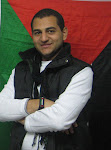
I made many amazing friends at the Fletcher Summer Institute. They are the people whose lives are an epitome of non-violent resistance in the face of oppression and tyranny. My friend Ayman Qwaider is a Palestinian activist, who has witnessed the brutality of the occupiers while working for various humanitarian organizations in Gaza. However, he still strongly believes in non-violent civil resistance. He thinks that brutality against brutality is not the solution. Born, raised and educated in Gaza, Ayman got a scholarship a few years ago to study in Europe. However, the Israeli Army refused to allow him to leave the strip because of their blockade. An undeterred Ayman launched a personal advocacy campaign on the social media, eventually forcing Israel to issue him a permit to leave Gaza. Mashallah Ayman has now completed his M.A in International Peace, Conflict and Development from a university in Spain and he is planning to continue his peaceful struggle for the liberation of Occupied Territories.

While India and Pakistan are archrivals, the people of two countries do not have innate hatred for each other. Far from that, we have so much in common. This is what I realized when I met Ayushman Jamwal, an Indian student from Cardiff University, at the Fletcher. We immediately became friends and spent most of our time together during the course. We discussed the history and politics of Indo-Pak relations. Ayushman criticized the atrocities Indian state has committed against Kashmiris and I castigated Pakistan for supporting non-state actors against India. Thank God neither of us was jingoistic, which made a constructive discussion and friendship possible. We discussed the curriculum taught in Indian and Pakistani schools and realized that both the states were teaching a pack of lies, a perverted and distorted interpretation of history to its future leaders. We concluded that whilst both states might continue their past policies, the people will have to come forward to make South Asia peaceful and prosperous.

Thursday, 21 July 2011

The humanitarian situation in Gaza Strip - July 2011

59 people were killed in accidents in tunnels, including 5 children, and 115 people were injured.

Since the beginning of 2010,The main crossing point for the movement of Palestinians to and from Gaza Strip (Rafah border with Egypt) remains limited to the passage of 500 people per day.

Please, spread this information as you can, and these dramatic and incontrovertible truth, write to friends, to newspapers, national and European parliamentarians, to anyone you want.


Gaza has 1.6 million inhabitants, more than 50% under the age of 18 years.

38% of Gazans live in poverty.


31% of the workforce in Gaza has no use and 47% of young people are unemployed.

54% of Gazans live in conditions of food insecurity and over 75% dependent on aid.

The economic output in 2010 was 20% lower than in 2005.


35% of agricultural land in Gaza and 85% of the fishable waters are totally or partially inaccessible due to Israeli military measures.


50 to 80 million gallons of partially treated sewage are discharged into the sea every day.


Over 90% of the water coming from the Gaza aquifer is not potable.


85% of Gaza's schools operate double or triple shifts.


United nations- office for coordination of humanitarian Affairs/occupied Palestinian territory

Sunday, 3 July 2011

Reflection on Nonviolent Conflict Training Course, Boston 2011

FSI is a setting for radical transformative empowerment. It’s likely that one might say I am exaggerating to start off my article with such a strong sentence. I have these feelings because I experienced them being a member amongst real united nations, full of inspiration and dedication to bring about change needed to be seen in their realities. Human rights, justice, freedom, aggression, intimidation, equality are part of the discourses I recognized and learned about from very experienced activists for freedom, justice, self-determination and equality. I often think that there are several forms of injustice taking place cross our globe, but all these forms of injustice result pain and suffering are at the same level for any nation regardless of its identity. Through an intense one week training program on nonviolent conflict at Fletcher School, I realized that the result of injustices and oppression are the same regardless of where conflict exists, in Palestine, Tibet, Colombia, Burma, and these are just a small number of conflict affected countries. When there is armed conflict, serious violations of human rights occur, and civilians are significantly the most to suffer its consequences. Probably, what helped the most to keep me faithful and hopeful after being subjected to an enormous number of human rights violations, is the good people I met in the training course and seeing their dedication and commitment to being at hand and of assistance for deprived voiceless people. Attending the training course on nonviolent conflict at the Fletcher Summer Institute in Boston was a spark of inspiration which gives me energy to stay hopeful that justice will prevail. Ordinary people have absolute power is an overwhelming statement which always fascinates and empowers me. Having the chance to share real stories from different parts of world on issues of freedom, equality and justice and being introduced to various kinds of struggle, has assured me that people still have power to challenge state power, and people still have the ability to transform realities through nonviolent resistance. Attending the FSI training program has widened my perspective and allowed me to see issues from different angles. Further, it equipped me with the essential tool of self-empowerment. Nonviolent and civil resistance will prevail against radical injustices. Knowledge is power and self-empowerment. Being a part of the FSI has placed a great responsibility on my shoulders. International Civil society. Throughout listening to people’s testimonies firsthand, I felt the suffering they were subjected to in their countries. I was moved by certain stories and highly motivated to end these injustices.

Tuesday, 21 June 2011

Challenging Israeli apartheid, starting at Ben Gurion Airport

by LAURA DURKAY on JUNE 20, 2011

From July 8-16, I will join hundreds of internationals for a week of solidarity actions in coordination with 15 Palestinian civil resistance organizations in the occupied West Bank and East Jerusalem. To my knowledge, this will be the first attempt to bring such a large number of internationals—already over 500, according to organizers—to the West Bank and East Jerusalem in a coordinated manner. While Freedom Flotilla 2, sailing in the coming days, rightly puts the spotlight on Israel’s cruel blockade of Gaza, we intend to show that Israeli repression in the rest of historic Palestine—the West Bank, Jerusalem, and what is now Israel—is no less important and is part of the same project of ethnic cleansing and colonization.

The opening act of our week of nonviolent resistance is, in my opinion, its most creative and daring component. On a single day, July 8, hundreds of internationals and Palestinians living abroad will fly in to Tel Aviv’s Ben Gurion Airport and perform one simple but radical action: refuse to lie about the fact that we are there to travel to the Occupied Territories and visit Palestinians.

Anyone who has traveled to Palestine knows the potential risks associated with this action. Israel controls all entry points into Palestine, except for the Rafah crossing into Gaza, which is controlled by Egypt and has its own Kafkaesque challenges. The Israeli government routinely denies entry to people it knows or simply suspects of being Palestine solidarity activists; journalists, academics and cultural workers sympathetic to the Palestinians; even people coming to do volunteer or charity work in the Occupied Territories.

This means that for years, the most common strategy among solidarity activists entering Palestine has been to keep your head down and lie about why you are there.

Plenty of us know the routine. You say that you’re a tourist. You play dumb about history and politics, and you never say you are going to visit Palestinians. You don’t point out the fact that every person of color in your group just got picked out for questioning. You submit calmly to interrogation and construct non-offensive half-truths, conveniently leaving out certain parts of your itinerary. When they search your stuff, you nod and say you understand it’s for “security reasons.” You swallow every rebellious instinct that brought you to Palestine in the first place and temporarily submit to a racist, invasive, intimidating security apparatus in the hope that they will deign to let you in to Palestine, and accept that this is the price to be paid for being able to do the work you want to do.

For the record, I don’t think there is anything inherently wrong with this strategy. In any given situation, the most useful way to interact with agents of the Israeli state is a tactical decision. I understand there are many groups of people who do not have the luxury of pissing off Israeli security: people who depend on free movement in and out of Palestine for work, study, or to see family; those engaged in long-term projects in the region for whom maintaining access to the Occupied Territories is crucial; those engaged in critical media work that gets Palestine’s story out to the world; those who may be in a more vulnerable position for any number of reasons.

But at the same time, we should be clear that Israel’s border controls and repressive entry policies are part of the apartheid system—a big part. Entry restrictions on solidarity activists, journalists, and NGO workers are a natural outgrowth of the restrictions that prevent a large percentage of the worldwide Palestinian population from returning to their own country and/or moving about freely within it. They are a component of the elaborate matrix of borders, walls, checkpoints, permits, soldiers and secret police by which the Israeli government exerts a choke-hold on free movement and political activity throughout occupied Palestine. They are part and parcel of the occupation machinery that seeks to isolate the Occupied Territories and make life there unbearable so that Palestinians will leave, and that frequently forces them out whether they want to go or not. And like all other parts of the apartheid system, they deserve to be challenged.

This year’s Nakba and Naksa Day protests saw Israel besieged on every one of its garrisoned borders by unarmed Palestinians simply wanting to return home. At the end of this month, Freedom Flotilla 2 will defy Israel’s punitive and illegal naval blockade of the Gaza Strip. We see the July 8 fly-in as our contribution to the new movement that is chipping away at Fortress Israel.

Some fellow activists have raised the possibility that this action will result in nothing more than hundreds of us being summarily deported, and possibly banned from entering Palestine in the future. It is entirely possible that this will happen, and anyone participating in this action should be aware of the risk. It seems to me a very small risk to take in comparison to the crushing violence Palestinians have stood up to for over 60 years. While this action is not for everyone, I believe the time is right for those in a position to expose and nonviolently resist Israel’s repressive entry policies to do so on a mass scale.

Just as no one thinks one flotilla (or two or three) is going to bring the siege of Gaza to an end, no one believes this one day of action will immediately alter the state of affairs at Ben Gurion Airport and the rest of Israel’s borders. In the short term, it is possible that it may even make airport personnel more suspicious and aggressive. That is how oppressors respond to acts of resistance. They often become more aggressive before they are defeated, because they rightly sense that the momentum is on the side of justice.

July 8, and the week of solidarity it opens, is one step in the long process of taking down the apartheid system. The Arab revolutions, the growing BDS movement, and Israel’s own increasingly hysterical reactions to nonviolent protest have radically accelerated the timeline of that process from what many of us believed possible only a few years ago. Israeli apartheid’s days are numbered, and now is the moment to challenge it on every front.

Laura Durkay is a member of Siegebusters Working Group and the International Socialist Organization in New York City. You can follow updates from the week of solidarity on her personal blog, Laura on the Left, and on Twitter at @lauradurkay.

Individuals interested in participating in the July 8-16 week of solidarity should email info@palestinejn.org or visit http://www.palestinejn.org/ for more details.

Resource

Monday, 20 June 2011

GISHA: The top 10 reasons why the opening of Rafah Crossing just doesn't cut it

Rafah Border Crossing | The Egyptian Side


In no particular order of importance, we thought we'd list some of the reasons why the opening of Rafah, while significant and helpful, doesn't meet all of Gaza's needs for access and why, as some voices in Israel have recently suggested, it can't serve as Gaza's only access point. Despite four unanticipated days of closure last week, the crossing has been operating for the passage of travelers on a more regular but still semi-limited basis.

1.Passage through the crossing remains limited: Egypt has indicated that it will operate the crossing six days per week during regular working hours, but it seems this won't be enough: between 400 - 450 individuals have been able to travel through the crossing per day from Gaza to Egypt. From November 2005 to June 2006, approximately 660 passengers per day exited the Gaza Strip through Rafah and according to the Palestinian Crossings Authority, 10,000 people are currently waiting to travel.


2.The situation is unstable: As last week's closure of the crossing indicates, the situation on both sides of Rafah remains unstable, such that it's not clear whether the crossing will remain open, nor exactly to what degree.


3. Rafah doesn't lead to the West Bank: Travel and movement of goods between Gaza and the West Bank remains severely limited, a problem which Rafah cannot address, as goods and Gaza ID holders are not allowed into the West Bank even via the Egypt-Jordan route. The West Bank and the Gaza Strip are part of the same customs envelope, and are recognized, including by Israel, as a single territorial unit, which, despite four years of tight closure, still shares one economy, one education system, one healthcare system and countless familial and social ties.


4. Export is not moving and not through Rafah either: Export remains severely limited (about 2 truckloads per day, the last of which left Gaza on May 1, 2011, compared with a target of 400 per day in the Agreement on Movement and Access) and is currently not taking place through Rafah at all. This is impacting industries across Gaza which used to sell or export their wares in Israel, the West Bank and abroad. Before the closure, the vast majority of Gaza’s "exports" were sold in Israel and the West Bank.

5.Construction materials do not enter through Rafah: Construction materials are being let into Gaza via Kerem Shalom only (between Israel and Gaza) for approved projects undertaken by international organizations and following exceedingly lengthy bureaucratic procedures. Each month since January 2011, about 10% of what entered monthly in the years prior to June 2007 has entered for these specific projects. At present, Egyptian authorities have not indicated if or when they will allow construction materials to pass at Rafah.


6. Import of goods does not take place at Rafah: Imports to the Strip purchased by the private sector enter Gaza from Israel via Kerem Shalom Crossing. Even if Egypt were to allow goods to enter at Rafah (and there is no indication that they intend to do so nor when) the crossing and surrounding roadways are not currently equipped to handle the transfer of large quantities of goods, on the scale of the access needs of the Strip.


7. Humanitarian aid does not regularly enter through Rafah: Aid enters Gaza via Kerem Shalom Crossing, between Gaza and Israel. At present, Egyptian authorities have not indicated if or when they will allow convoys of humanitarian aid to pass at Rafah.


8.Medical patients in need of treatment not available in Gaza cannot always make the long journey to Egyptian hospitals. In any case, Palestinian hospitals in east Jerusalem and the West Bank, part of a common Palestinian health care system, are there to serve all residents of the Palestinian territory, including Gaza residents.


9. Reports prove it: Restrictions on access at the crossings between Israel and Gaza (at Kerem Shalom for goods and Erez for people) continue to impact the well-being of residents of the Strip. Yesterday UNRWA published a study showing high rates of unemployment and the Association for International Development Agencies also reported recently on how limits on the entrance of construction materials primarily impacts the work of aid agencies and residents of Gaza.


10. Rafah doesn't lead to the West Bank: Oh wait, did we say that already? Well, we're saying it again, because it's very, very important.

Monday, 13 June 2011

معا لنغير واقع فلسطين هذا الصيف


معا لنغير واقع فلسطين هذا الصيف


لجان المقاومة الشعبية ومؤسسات المجتمع المدني الفلسطيني ومناصري ونشطاء السلام وحقوق الإنسان و أصحاب الضمائر الحية في كل العالم يدعون الجميع لنشاطات في فلسطين في الفترة بين 8-16 /7. مئات ألأجانب استجابوا للدعوة وبانضمام أعداد كبيرة من الفلسطينيين نستطيع عمل الكثير للتغيير. لندركْ أنّ الدخول بالمئات لفلسطين عبر مطار بن جوريون في فترة 24 ساعة سيرسل رسالةً واضحةً لإسرائيل لاحترام الحقوق الإنسانيّة الأساسيّة للذين يريدون زيارة فلسطين. يمكنكم زيارة موقع حملة الحق في الدخول على http://www.righttoenter.ps. سيكون هناك برنامج فعاليات ومقاومة شعبية في القدس ومحافظة بيت لحم والخليل ورام لله والأغوار والنقب الخ.

إنّ الفلسطينين في فلسطين التاريخية و المنفى لا زالوا يؤمنون بالعمل من أجل السلام المبني على العدل وبمساعدة المجتمع المدني نستطيع أنْ نحقّقَ سلامنا و حريتنا. نحن نؤمن بالمقاومة الشعبيّة كوسيلة لاستعادة حقوقنا كما اعترفت بها القوانين الدوليّة. نحن نؤمن -بناء على تجاربنا الناجحة السابقة- أنّ كلَّ فردٍ منّا تقع عليه مسؤوليّةٌ ويستطيع أن يصنع التغيير اللازم. ندعوكم للإنضمام إلينا لكي نكون التغيير الذي تريدون أن تروه في هذا العالم. إنّ تجربتنا السابقة في هذه الفعاليات كانت ناجحة مثلا أنظر فعاليات شهر 12 http://www.youtube.com/watch?v=Rif2ZSSeRok وفعاليات يوم النكبة 15/5 والنكسة 5/6 وأسطول الحرية. هناك عددٌ كبير ملتزم بالحضور والمشاركة في هذه النشاطات وأكثر من 100 متطوع محلي.

مجموعات النشطاء المحليّين في أوروبا وامريكا الشمالية واللاتينية ومناطق أخرى من العالم تقوم بترتيب قدوم الوفود إلى فلسطين. وقد قامت المجموعات المحلية المدرجة أدناه بتكوين لجانٍ مختصّة للعمل في نواحٍ(قانونية, وإعلامبة, ولوجستية,وتواصل, وبرنامج) ولقد شرعت في العمل. راسلونا على info@palestinejn.org اذا كنتم تودون التواصل أو المساعدة مع المجموعات المنسقة في بلدكم أو محليا في فلسطين. معا لمرحلة جديدة للتغيير والحرية.


مسرح الرواد alrowwad-acts.ps شبكة العدالة لفلسطين palestinejn.org

مركز بديل badil.org المركز الفلسطيني للتقارب بين الشعوب PCR.PS

أصدقاء الحرية و العدالة في بلعين bilin-ffj.org الحملة الشعبية- اوقفوا الجدار stopthewall.org

مؤسسة هولي لاند ترست holylandtrust.org مشروع المناصرة palestinesolidarityproject.org

اللجان التنسيقية للمقاومة الشعبية popularstruggle.org مركز سراج للسياحة البديلة sirajcenter.org

شباب ضد الاستيطان youthagainstsettlements.org حركة التضامن العالمية palsolidarity.org

مركز المعلومات البديلة alternativenews.org مركز العمل المجتمعي- القدس cac-alquds.org

حملة شدو الرحال من أجل القدس pncj.org الإغاثه الطبية الفلسطينية PMRS.ps

مبادرة الدفاع عن الأراضي المحتلة OPGAI.net مركز العودة-بيت ساحور

مركز شباب مخيم عايده key1948.org اللجان الشعبية في عدة قرى ومواقع


Sunday, 12 June 2011

Mind the Strip Documentary


Mind the Strip is a documentary to highlight a story of Ayman Qwaider, Gazan student who had difficulties to access the closing borders of Gaza to pursue his studies in Spain. It does not often happen that students can easily get out from the blockade in Gaza Strip pursuing their further studies abroad. Ayman had numerous obstacles to reach his goal in Spain and pursue his masters’ studies. After working tirelessly and contacting anyone who would listen to his story, comprehensive media campaign, he received his longed-for transit permit from Israel in order to exit the Gaza Strip and travel to University of Jaume I in Spain, to pursue a graduate degree in Peace, Conflict & Development Studies (how appropriate!).


Facebook Event in Girona, Spain June16

Mind the Strip Facebook page

Website: Mind the Strip Website