Wednesday, 24 February 2010

I Still Want Peace

Having walked across the dead bodies of my relatives and people and having experienced their deaths; I still want peace, I still dream of peace and security for the families of Gaza and all of Palestine
I come from an area of the world that has been violated; violated of our human rights for decades, which continues up to this very day, to this very moment as I speak these words. I have come from the heart of Israeli-Palestinian conflict to study, not necessarily to understand my conflict better, as I have lived the conflict my entire life, but to find a means to ending the conflict, and to attaining peace and justice for my people.

It was not easy for me to come here, as I struggled for many months with the idea, and the possibility, of not being able to make it through the Gaza Siege, the complete and total enclosure of Gaza from the rest of the world. Only through the efforts of many people, including those of you in my class that supported me in my time of need, was I able to break through the siege and ultimately make it here to Castellon where I share with you these words today.

I am sincerely grateful to my new university, the university of Jaume Primer, my classmates, professors and the administration for all of your support in making this master program a possibility for Ayman Quader. I believe that my experiences and hardships in Gaza will bring a fresh dimension and perspective to the study of conflict, development and peace studies.

It is my hope that my presence with you here today, and in the coming months, in this congress, might assure me that justice and peace will prevail one day in the near future. When I was initially stuck in the Gaza Strip and unable to travel hear and when my eventual presence in Castellon was still in doubt, I was really frustrated because I was just asking for a very basic right human right, which is the right of education. Such a right is guaranteed under international laws and conventions. After a long battle, which fortunately resulted in me being here, I can’t find the words to truly express to all of you how much it really means for me to be here; not only for me, but for my family and my friends that are still stuck in Gaza without any proper means to sustain themselves and their basic needs.

Coming from the conflict, and growing up in the conflict, it is difficult for me to step outside of the injustice that I have suffered and to glean differing perspectives on the situation in Gaza and in Palestine, and it is my hope that this program will give me the perspective to be able to do this, while applying an academic framework that incorporates the prospects of peace and development. This is truly what I feel Gaza needs at this point in time. We are a damaged people, an abused people; because of the injustice that is taking place in Gaza, it can be extremely difficult for many of us to break through the anger and pain of the occupation, and to seek a peaceful solution. Many of my brothers and sisters in Gaza have experienced so much injustice, that it is almost impossible to seek a solution to the conflict through peaceful means. It is especially for these people that I am here today.

While I hope to learn basic frameworks for applying peace and conflict resolution to my homeland of Palestine, without the end to the human rights violations that have occurred over the course of nearly 62 years, without the end to the oppression of my people and the hope for sovereignty and freedom for the future, such a conflict can never be solved. In 1948, 750,000 Palestinians were ethnically cleansed from their ancient homelands, and to this day, no reparations have been made for this initial injustice, an injustice which continues to this day with the continued annexation, for colonial settlement, of East Jerusalem and the West Bank – contrary to international law and many UN resolutions – and the brutal siege on the Gaza Strip, which escalated to a full scale attack on civilian infrastructure in Gaza in the winter of 2008-2009; an escalation in which 1,400 Palestinians lost their lives. The destruction in Gaza last winter was truly horrifying.

This is the basis of the Palestinian struggle, of my personal struggle; the struggle for justice in a land of injustice and personal struggle. It is my hope and my dream that I will be able to learn something over the course of the next two years that will help my people to overcome this struggle for justice and for peace.

=============================
Ayman T. Qwaider
International Master Postgraduate Official Programme in Peace, Conflict and
Development Studies - UNESCO Chair in Philosophy for Peace - Gaza
University of Jaume I
Av. Vicent Sos Baynat
12006. Castellon de la Plana, SPAIN.
+34 648 44 11 98
E-mail: ayman.qauder@gmail.com
Skype: peaceforgaza
Facebook: ayman.quader
Twitter: peaceforgaza
Web: www.peaceforgaza.blogspot.com
www.paltelegraph.com
http:picasaweb.google.com/ayman.qauder
=============================

Saturday, 20 February 2010

A One-Man Campaign


It doesn't often happen that we get to report success stories, but this week Ayman Quader "made it". Ayman, a 23-year-old student from the Gaza Strip, overcame numerous obstacles to reach his goal. After working tirelessly and contacting anyone who would listen to his story, he received his longed-for transit permit from Israel in order to exit the Gaza Strip and travel to University of Jaume in Spain, to pursue a graduate degree in Peace, Conflict & Development Studies (how appropriate!).

On November 3, 2009, Ayman received his acceptance letter from the university, and from that moment he began his journey on an obstacle course to receive the necessary transit permit from Israel to leave Gaza. First up, the Palestinian Civil Affairs Committee refused to forward his application to the Israeli District Coordination Office (DCO), noting that the DCO does not accept applications from students, but Ayman did not give up. His next step was to contact Gisha who appealed to the Spanish Embassy. This was necessary because Israel makes a transit permit conditional on an official request from the student’s destination country and requires its diplomats to escort the student from the Erez border crossing between Israel and Gaza to the Allenby Bridge border crossing between Israel and Jordan – an awkward arrangement that overburdens diplomats and restricts students.


Ayman, who knew the fate of most others who had submitted similar applications, simultaneously launched a media “campaign", which started on his blog, continued on the Facebook group he created, and reached a peak with his starring role in countless articles in the local and Spanish press. His efforts ultimately bore fruit, and Ayman, who has meanwhile become a media star in Spain, received his transit permit from Israel to travel to Spain. Ayman's story has a happy ending, but there are still close to 600 young people waiting in Gaza for exit permits to travel abroad to study. Ayman, finish your degree in conflict resolution and come back quickly! Your talents are sorely needed.

Sunday, 14 February 2010

FROM DARKNESS TO THE LIGHT, Gaza To Barcelona

FROM DARKNESS TO THE LIGHT


From Gaza to Barcelona

There are incredible feelings passing through my body these days in Spain. In Gaza, there were basically three feelings I had, one was happiness, another was hope, and the third was worry. In Gaza where my studies started, worry was the biggest feeling. Worry of where it will all lead to. I was fortunate that it eventually led to Spain where I am being supported by really good people who are concerned about my cause. Hope is now the predominant feeling, hope that the light would come.

I am personally gratified for my new situation in Spain. I am gratified that so many people helped me get out of Gaza and engaged in the media campaign that took place. However, there are 500 other Aymans in the Gaza Strip in the same situation that I was in. They are being deprived of their basic right to an education, a right that is protected by UN agreements and resolutions, but no longer respected or adhered to. It is a great tragedy to think that the other 500 Aymans need a special media campaign to get them out as well.

Aside from education, the Gaza Strip has been experiencing a siege where over 1.5 million people are deprived of their basic rights. Last night I took a break from celebrating with my new friends to call my father. It was ten in the evening. He informed me that they were now in total darkness as the power supply had been cut off. This was a result of the siege which prevented the necessary industrial fuel from entering the area. Just another example of the collective punishment that is being inflicted on an entire population.

This should send an explicit message to the International Community to help put an end to the suffering of 1.5 million people and open the borders of Gaza. The siege must be ended! Palestinians must be given the chance to live their lives with pride and dignity. The inhumanity that is ting place in the Holy Land must come to a halt. The world must come to the realisation that we are all human beings with common interests.
Ayman Quader
Castellon, Spain

Monday, 1 February 2010

A Student From Gaza


A Student From Gaza

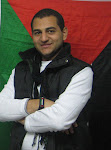
My name is Ayman Talal Quader, I am 23 years old, and I live in the Nuseirat refugee camp [1], in the middle of the Gaza Strip.

CAS: What is it like to be a student in Gaza?

Ayman Talal Quader: I remember when I was still at secondary school, it was before the withdrawal of Israeli settlers from Gaza in 2005, and the Israeli army would block the road which ran from where I lived to where my school was. So, from an early age I learnt the education of occupation.
I finished my degree at the Islamic University of Gaza [2]in January 2008. The situation for students in Gaza is completely different from those studying outside of Palestine. Most students here never get the chance to prove their true potential. I am 100% certain that they have the desire and energy to do so, but they are simply not given the space to demonstrate their abilities. Of course, the students are seriously affected by the ongoing siege of the Gaza Strip; we cannot get the materials we need, the books, stationary and even paper!
In the most recent war, several of the university buildings were either partially, or in some cases completely destroyed. With the borders are still closed, no raw materials are being allowed into Gaza, so those buildings that were destroyed a year ago are still lying in piles of rubble.

CAS: Are you hoping to continue your studies?

Ayman Talal Quader: I hope to study towards a Masters at Universitat Jaume I (UJI) [3] in Spain, in a city called Castellón, not far from Valencia. I was a granted a scholarship in November 2009, to study Peace, Conflict and Development Studies.
I have all the legal papers I need: passport, visa, an acceptance letter from the University, supporting letters from NGOs in Spain, and even from the Spanish Embassy in Cairo. But as you know, the borders are closed, so no-one can leave easily. My problem right now is that my studies start in six days from now, on February 8th, and I have no way of leaving Gaza…
I have been co-ordinating with embassies and human rights organisations, but I still haven't heard anything. My flight leaves from Cairo on February 1st, but if I'm not allowed out then I will lose my ticket. I am so frustrated by this situation.
I saw in the news yesterday that Spain are acting as a mediator, to assist myself and 13 other students to leave the Gaza Strip, who are about to lose their scholarships. So I hope that everything will be OK, and I feel so lucky to have been able not only to get my voice out there, but also to help raise awareness about those other 13 students.

CAS: If you are not allowed to travel abroad, how do you see your future?

Ayman Talal Quader: This is a very frustrating question for me. I hope that I will get out without any problems. This is a golden opportunity for me, and I don't want to lose it under any circumstances, but I do fear for my future.

CAS: How can students in other countries support your cause?

Ayman Talal Quader: As students from across the world, we all share one thing in common - the right to education. This is a right supported by international law, supported by the UN, by the EU, and by governments and agencies from all over the world. So all I need is my right, to pursue my studies like any other student.
I have already received a lot of support from international students, people that are just like me, especially from those in Spain. They are running a petition, [4] which has received 200 signatures so far, they launched a Facebook group called "Open Rafah For Ayman" [4]which many people have joined, and it makes me so happy to see their comments in the group. I have also been interviewed by newspapers, magazines, and two days ago by a local Spanish radio station in Castellón, where I spoke about my story and the ongoing suffering of the Gaza people.
The support is great, but in reality it doesn't mean anything, all I need now is a quick solution for my situation.

CAS: What gave you the idea to start your "Voice From Gaza" [5] blog?

Ayman Talal Quader: During the war on Gaza, I was stuck in my home for 23 days straight, with nothing to do. I didn't have much experience in writing or blogging at the time, but after the war ended, I felt that I had something to get out, from my heart. I found that I could do so through writing.
There was one family that were evacuated from their home; they were living very close to where the Israeli troops were stationed at the time, so they were forced to leave. They were being sheltered at my family's home. They used to walk to their house to check that it hadn't been damaged and that the rest of their extended family hadn't been harmed, and they would come back to our house by walking down Salah ad-Din Street, the main street in Gaza. It was very clear to the Israeli soldiers that they were civilians walking in the street, looking for shelter. One day, we were waiting for them to come back to our house, and three of the children from the family, whilst they were on the way, were targeted by an Israeli missile, which had several shrapnel bombs inside, and all three were severely injured. So half of the family were at my home, and the other half were in the hospital. I saw the suffering of their father and their mother in front of me... their home was in danger, and now three of their children were in hospital with life-threatening injuries, and it was such a tragic situation. I felt like I had to write something about this.
I wrote an article and published it online, and I was shocked by the response; it was translated into several languages, and I was getting e-mails from people all over the world, so I decided that I would start to write a couple of stories per month, and continued from there. The messages of support push me to keep on writing.

CAS: It says at the top of your blog that you believe, one day, justice will prevail here. With the siege now tighter than ever, how do you think a solution can be achieved?

Ayman Talal Quader: What's happening in the Gaza Strip is a real injustice, and it's unlawful, in regards to the siege, the war, and the suffering of the Gazan people. But to believe in something, is better than not to believe. We are passing through very harsh conditions now, with the closure of the borders, shortages of food supplies and shortages of medicine, but these conditions will not last forever. For myself, I believe that justice will prevail one day, and no-one can deny me of this. I am sure that this day will come.

CAS: What gives you inspiration?

Ayman Talal Quader: The smiles of the Gazan people. The people of Gaza have lived through everything, and can adapt to any situation; if it is a time of war, they live in war, if it is a time of peace, they live in peace, if it is a time of entertainment, they enjoy themselves! Whatever happens here, they try to live their lives. So when I see children here smiling, laughing, shaking hands and playing games with each other, it gives me inspiration.

CAS: If you could send a message to the international community, what would you say?

Ayman Talal Quader: In my case, we were very successful in gaining the support of the media. I think that the European media in particular is finally taking an interest in the plight of the Palestinians, and it is important for people to take advantage of this.
The world cannot stay silent forever. This is a severe injustice in the Gaza Strip, and our human rights are being violated every day.
If the world continues to watch our rights being violated without taking action, then this is a real catastrophe... Not just for the people of Palestine, but for all of us.

Ayman Quader's blog, "Voice From Gaza", can be found at www.peaceforgaza.blogspot.com [6]

Words - Jody McIntyre.
Photo - Ayman Quader.

Today marks the beginning of Ayman’s future: whether he stays in the Gaza Strip unable to start his Masters in Spain, or whether he is allowed out of the border to fulfil his dream. Jody McIntyre shares Ayman’s thoughts and inspiration with us…

Words - Jody McIntyre.
Photo - Ayman Quader.

Tuesday, 26 January 2010

Blockade threatens students' future in Gaza

Blockade threatens students' future in Gaza


Many students in the Gaza Strip aspire to a higher education abroad but the Israeli-Egyptian blockade deprives them of setting out on their journey.

Hundreds of Gaza graduates receive scholarship to attend universities abroad, but they are trapped in the impoverished coastal enclave. They are going to lose their scholarships according to a report by Press TV correspondent

Ayman Quader is one of these students. He has finished his bachelor's degree and was awarded a scholarship yet he cannot leave Gaza. The first term of his scholarship begins in February.

Quader told our correspondent that he is being prevented from going out by the complete siege of the Gaza Strip. Quader calls on all those who are concerned with humanitarian conditions in Gaza to support him and his peers who seek a brighter future in schools abroad.

Israel has imposed crippling restrictions on the Gaza Strip since 2007, preventing the shipment of food, fuel and other essentials into the populated region, pushing its impoverished population to the verge of starvation.

The condition has been further worsened by Egypt's refusal to open the Rafah crossing — the only alternative which is a border terminal not controlled by Israel —.

Along with the other residents of the Gaza Strip, students must wait until the next opening of the Rafah crossing. But there are no scheduled openings of the only gate for the 1.5 million Palestinians in the blockaded region.

Academicians in Gaza argue that traveling abroad is one of the fundamental rights of students which must not be violated by political disputes.

"I'm disappointed and frustrated as a teacher because my students are losing golden opportunities to pursue their studies abroad," said a Gaza University teacher, Akreem Habeeb.

Habeeb expressed regret that many of his students with scholarships from European and American universities lost their chance because they have not been allowed to leave the Gaza Strip.

"These students are living in a great fear of losing their seats and universities," Gaza Education Minister Ahmad al-Najjar told Press TV, warning "their future is in a great danger."

Students in the Gaza Strip have held several protests against the enclosure of their homeland, calling upon Egyptian authorities to facilitate their traveling abroad, requests that appear to fall on deaf ears in Cairo.


Reported by: Yousif EL Helo, Press TV
Ayman T. Quader, Gaza City

Sunday, 24 January 2010

I Have a Dream, by Ayman Quader


This is Ayman Talal Quader, a Palestinian living in the Gaza Strip, where its people have been besieged for almost 4 years. I was born in July, 1986. I received my education in the UNRWA schools since my childhood. Then I finished my studies from the Islamic University of Gaza from the English Department in 2008.

As a Palestinian who truly loves his homeland and believes that peace and justice will cover my people; I have been looking forward to helping my people especially in the cruel condition they are passing through in the present time. I have significantly been different fields' pre and post of my university studies for almost 4 years. I have worked as volunteer in civil societies where I practiced tasks to help people and educate children. Since August 2008, I have been dedicating my life to helping my needy people through joining one of the international humanitarian organizations that based in the Gaza Strip. Additionally, I have launched a blog peaceforgaza, through which I have been trying to bring my people suffering to be seen by people internationally.

Where and when have I granted the scholarship?

I have been recently accepted to an academic scholarship program at the Universitat Jaume I (UJI) in Castellón, Spain for the International Masters in Peace, Conflict and Development Studies (PEACE Master). I have been successfully granted a Spanish student visa in order to complete my academic program that begins February 2010 and runs all the way through to May of 2012.

What are the senses of suffering?

Since the first day on my acceptance in Nov 2009 at the university, the hardship starts. As the Gaza strip brutally lives under a total siege, I have been getting worried from the very beginning. The main cause that gravely makes me worry is how to get out from Gaza. I have been forcing myself several times to get myself calm down till I get the visa keeping in my mind the hardship that I will be passing through when I get the visa. I have been granted the student visa recently, then I have come to the really suffering entitled "Rafah Border".

Why am I deprived from my basic right?

All I aspire is my fundamental rights to learn and study; rights that are supposed to be guaranteed and recommended by all the international resolutions and the United Nations. I am not asking for a miracle, it is my reserved right. I am handling all my documents, visa, and acceptance letter from my university and supporting documents. Why I am being prevented from leaving Gaza and prevented access to Spain? I am actually paralyzed whom to ask and consult in regard to my exit from Gaza. I have been knocking all the doors, asking for help and advice to bring me out so as to receive my education in Spain.

The conditions of the borders have become extremely complex, making it almost impossible for Palestinians living in Gaza to leave under any circumstances, including for medical treatment, to visit relatives or on academic scholarship to study abroad. The borders, including the Rafah border - the only throughway between Gaza and Egypt - are all controlled by Israeli Security Forces, although Israel's control of the Rafah border is more indirect than the borders leading out of Gaza and into "Israel Proper" (as defined by the 1967 armistice lines; see UN Resolution 242). The Israeli government practicing a collective punishment of a civilian population, contrary to article 33 of the Fourth Geneva Conventions (1949), by neglecting much needed humanitarian aid and building supplies into the strip, pre and post Operation Cast Lead. The result is thousands of homeless and starving Gazans left with nowhere to turn but the international community.

I am growing increasingly worried as my studies are due to begin at the beginning of February and my flight is booked for February 1.

I am appealing and calling lawyers, politicians, journalists and all activists for human rights to join the fight for me and my right to the education that I have always dreamed of.

- Ayman Quader, in Gaza City